 Journal of Medical Research and Surgery
PROVIDES A UNIQUE PLATFORM TO PUBLISH ORIGINAL RESEARCH AND REMODEL THE KNOWLEDGE IN THE AREA OF MEDICAL AND SURGERY
Journal of Medical Research and Surgery
PROVIDES A UNIQUE PLATFORM TO PUBLISH ORIGINAL RESEARCH AND REMODEL THE KNOWLEDGE IN THE AREA OF MEDICAL AND SURGERY



 Indexed Articles
Select your language of interest to view the total content in your interested language
Adan Araujo-López1* , Orozco Jose de Jesus1, Sanchez Navarro-Lopez1, Ana Luisa1, Rueda de Leon-Serna3, Rodrigo3, Ponce de Leon-Camargo2, Daniella Andrea2
1Board Plastic Surgeon, San José Hospital of Queretaro/Hospital Angeles de Queretaro, Santiago de Querétaro, Mexico.
2General Surgery Resident, San José Hospital of Queretaro/Hospital Angeles de Queretaro, Santiago de Querétaro, Mexico.
3Social Service in Plastic Surgery, San José Hospital of Queretaro/Hospital Angeles de Queretaro, Santiago de Querétaro, Mexico.
Correspondence to: Adan Araujo-López, Board Plastic Surgeon, San José Hospital of Queretaro/Hospital Angeles de Queretaro, Santiago de Querétaro, Mexico.
Received date: February 07, 2025; Accepted date: February 24, 2025; Published date: March 04, 2025
Citation: Araujo-López A, de Jesus OJ, Navarro-Lopez S, et al. Geometrical Advanced Surgical Marking Technique in Gender-affirming Mastectomy J Med Res Surg. 2025;6(2):31-34. doi: 10.52916/jmrs254163
Copyright: ©2025 Araujo-López A, et al. This is an open-access article distributed under the terms of the Creative Commons Attribution License, which permits unrestricted use, distribution and reproduction in any medium, provided the original author and source are credited.
Background: Nowadays in gender reassignment surgery, the application of marking techniques acquires a crucial relevance. In this context, using a geometric hybrid technique for preoperative marking in mastectomy has proven to be a fundamental tool. Material and Methods: The main purpose of this article is to discuss a case series of 6 cases, of an advancement of Breast Flaps and use it as a length in the average chest in Mexican patients with III degree of Gynecomastia and with Ptosis by Regnault II degree. The Geometrical flaps are 2 rectangular triangles, with 90-degree flaps of a VY advancement, and a Graft of 32 or 34 millimeters Nipple-Areola. Discussion: Surgical marking practices in sex reassignment mastectomy are examined, taking into account the reports of Berry et al. as well as the studies of Namba et al. and Knox et al. In addition, the comparative study by Rifkin et al. adds a contemporary perspective, comparing periareolar and double incision patterns. The synthesis of these findings offers a comprehensive exploration of surgical marking practices delving into hybrid geometric techniques, from which surgeons, researchers, and transgender healthcare professionals will benefit. Conclusion: This technique was reproducible in all patients who underwent the surgical procedure after geometric hybrid marking for mastectomy where the NAC graft (nipple-areola complex) was reproduced without complications.
Mastectomy, Masculinization, Sex reassignment surgery
In the delicate realm of gender-affirming surgeries, the artistry and precision of mastectomy play a pivotal role in sculpting not just physical contours but the very essence of identity for individuals undergoing gender reaffirmation. As we step into this profound exploration, it becomes imperative to unravel the intricacies and significance of the surgical marking process in mastectomy - a transformative journey that transcends the realm of medicine and ventures into the realms of self-realization, empowerment, and the harmonization of one's identity with their physical form [1].
The symphony of knowledge guiding this exploration draws from an anthology of groundbreaking studies and transformative experiences meticulously documented by pioneering surgeons and scholars. Our narrative voyage commences with a contemporary survey by Rifkin et al., which dissects the nuances of gender-affirming mastectomy, comparing the periareolar and double incision patterns. This study serves as our North Star, shedding light on the evolving landscape of surgical techniques that define the contours of gender-affirming surgery in the present day [1-4].
Nguyen et al.'s technical revelation introduces an innovative technique to optimize symmetry in gender-affirming mastectomy [5]. As we delve into the pages of this study, we witness not just a surgical procedure but an artistic endeavor to harmonize the physical manifestation of gender identity, emphasizing the importance of meticulous surgical marking in achieving optimal outcomes [5].
Temporal trends in gender-affirming surgery among transgender patients in the United States, as illuminated by Canner et al., have become a cornerstone for our understanding of the dynamic landscape of gender reaffirmation [6]. This temporal lens provides a panoramic view, allowing us to appreciate the transformative journey that not only transcends individual experiences but also mirrors societal evolution in acknowledging and supporting diverse gender identities [6].
Berry et al.'s monumental experience in female-to-male transgender chest reconstruction, borne out of a large consecutive, single-surgeon endeavor, enriches our narrative with a firsthand account of the transformative power of surgical interventions. This consecutive experience weaves a tapestry of knowledge, emphasizing the importance of continuity and expertise in the surgeon's hands. The Ghent algorithm, as implemented by Bjerrome Ahlin et al., emerges as a beacon of refinement in subcutaneous mastectomy for female-to-male transsexuals. The implementation of this algorithm marks a paradigm shift, offering improved results and heightened patient satisfaction, underlining the significance of a systematic and standardized approach [7].
The main purpose of this article is about doing an advancement of Breast Flaps with the most Masculinization Flap, for a nice reconstruction and not a flat flap, recreating an opportunity with the technique of the Geometry of 2 Triangular Rectangle advancement flaps. We present a series 6 cases of patients who were officially transgender in the Masculine line, the inclusion criteria were:
The documents we certified as the first step were; Official Documents in Masculine Line Transgender, Psychologically accepted by a Psychologist, and 100% realistic of his transformation, with this parameters we accept patients with a Breast of 200 to 300 grams, with the Gynecomastia Grade III (Figure 1) and Ptosis Grade II of Regnault (Figure 2).
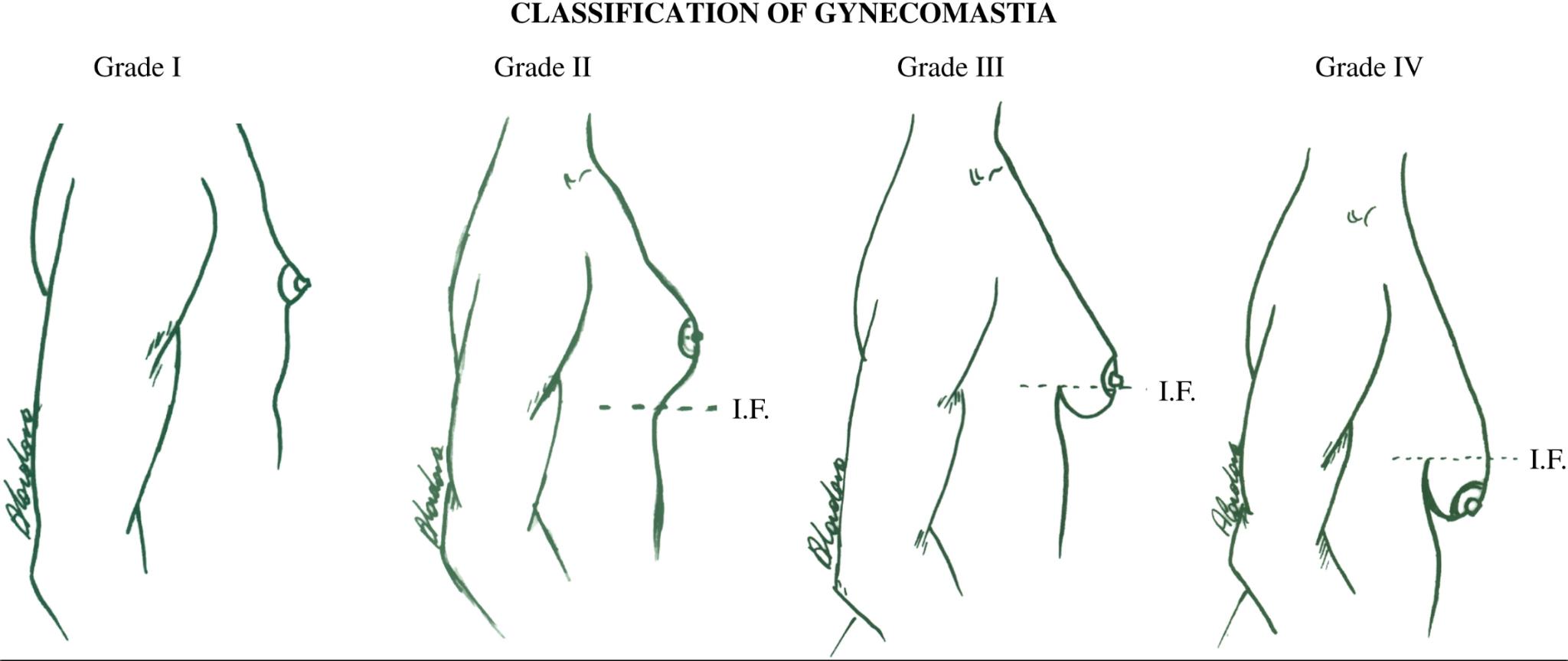 Figure 1: Ginecomastia classification.
Grade I: minimal hypertrophy and/or less than 250 gr without ptosis.
Grade II: moderate hypertrophy and/ or minimum 250 gr up to 500 gr without ptosis.
Grade III: severe hypertrophy and/ or more than 500 gr with ptosis.
Grade IV: severe hypertrophy with II or III ptosis.
 Figure 2: Regnault (Ptosis Mamaria).
Grade also called as type A refers to a normal position of the breast and the nipple.
Grade I/B: also referred to as minor ptosis consists of the nipple laying at the level of the submammary fold above the lower contour of the gland.
Grade II/C: also referred to as moderate ptosis consists of the nipple lying below the level of the submammary fold but remaining above the lower contour of the gland.
Grade III/D: also referred to as major ptosis consists of the nipple lying below the level of the submammary fold and at the lower contour of the gland.
Pseudoptosis/E: consists of the nipple remaining above the submammary fold and the lower breast lies below the breast crease.
Glandular ptosis: consists of the nipple and the hypoplastic gland lying below the submammary fold.
The Exploration criteria were based on a BMI of less than 30 kg/m2, Breast weight of 200 to 300 grams, no cancer or tumors palpable in the breast, and axilla foldings.
The Marking of the technique is based on 3 lines that create a rectangular with a triangle form, we draw the first line by the axillary fold to the height of the breast groove, it is the 2nd point (Point A of reconstruction - Rectangle Triangle W) then recreate a breast groove line with a height of an angle of 45 degrees to 2.0 cms from the midline (Point B - Rectangle Triangle Z) - this is the First line reconstruction (Figure 3).
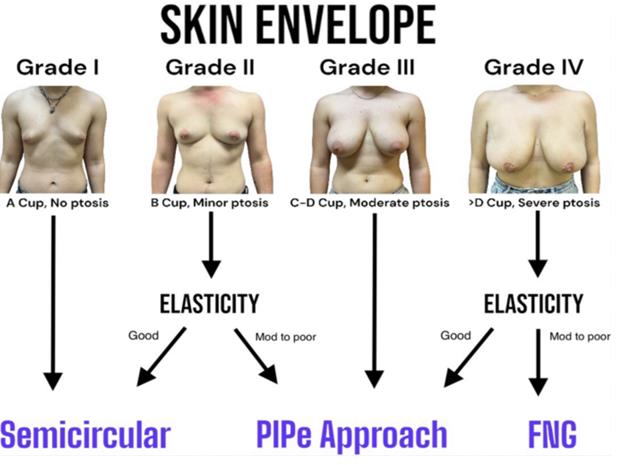 Figure 3: Surgical approaches depending on the ptosis and volume of the breast previous to chest masculinization top surgery.
Semicircular: Keyhole and periareolar approach.
PIPe Approach: Posteroinferior pedicle approach.
FNG: Free nipple grafts.
The second line of the reconstruction begins with the first line at the axillary fold in a vertical line in the anterior axillary line to the inframammary fold (Point C), including part of the Spence tail, in the low portion of the breast groove recreate a line 2.0 to the midline (Point D), and begin to unite with the first line reconstruction (Figure 4).
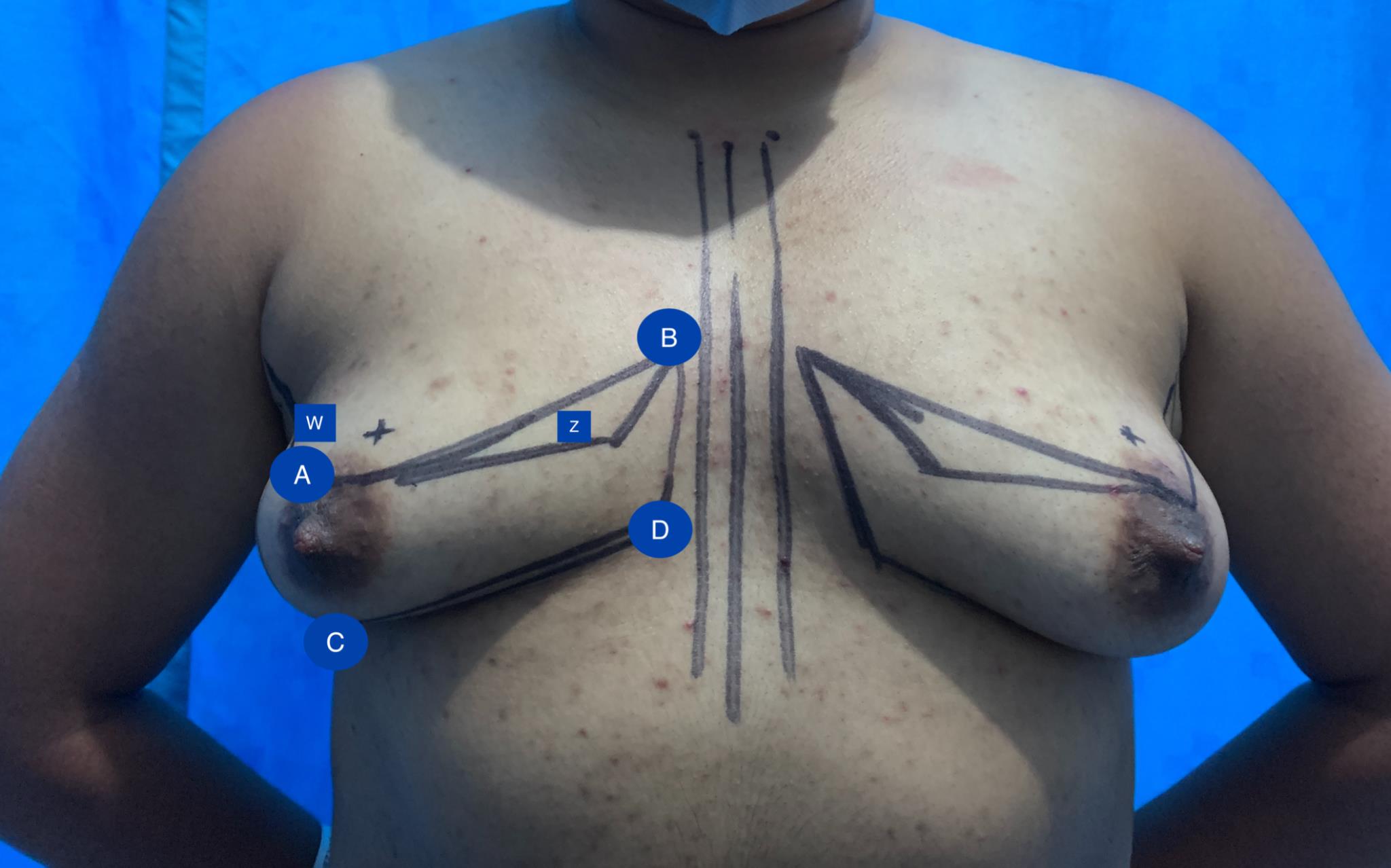 Figure 4: The geometrical marking.
The point A is the most important, the point B is the middle, the point C is the anterior line of the inframamary fold, the point D is the conjunction of the medial line, triangle W fold to point C, and the triangle Z advance to point D.
The aerola nipple complex goes as a graft of 32 a 36 mm 2 cms from de inframamary fold.
The advancement of the flap begins with tumescent conventional liposuction in the axillary fold and Spence tail of 200 ml infiltration and 180 ml extraction, to get the perfect match over the flap, with drainages of ⅛ french.
The management of the Nipple Areola Complex (NAC), the best way to treat in this technique we understand that was the graft of it, because we have avoid flaps of preservation and necrosis of it, even the patient understand they will not have sensibility in the breast with this surgery, the marking is to create a new NAC surface with an aerolotome desepitelization that is at 2 cms of the new inframammary fold inferior and a 90º angle of the subclavicular linea at 10 cms from the middle line of the torax (It has an average of 34 mm length). The immediate result is very pleasant and aesthetical very masculine (Figure 5).
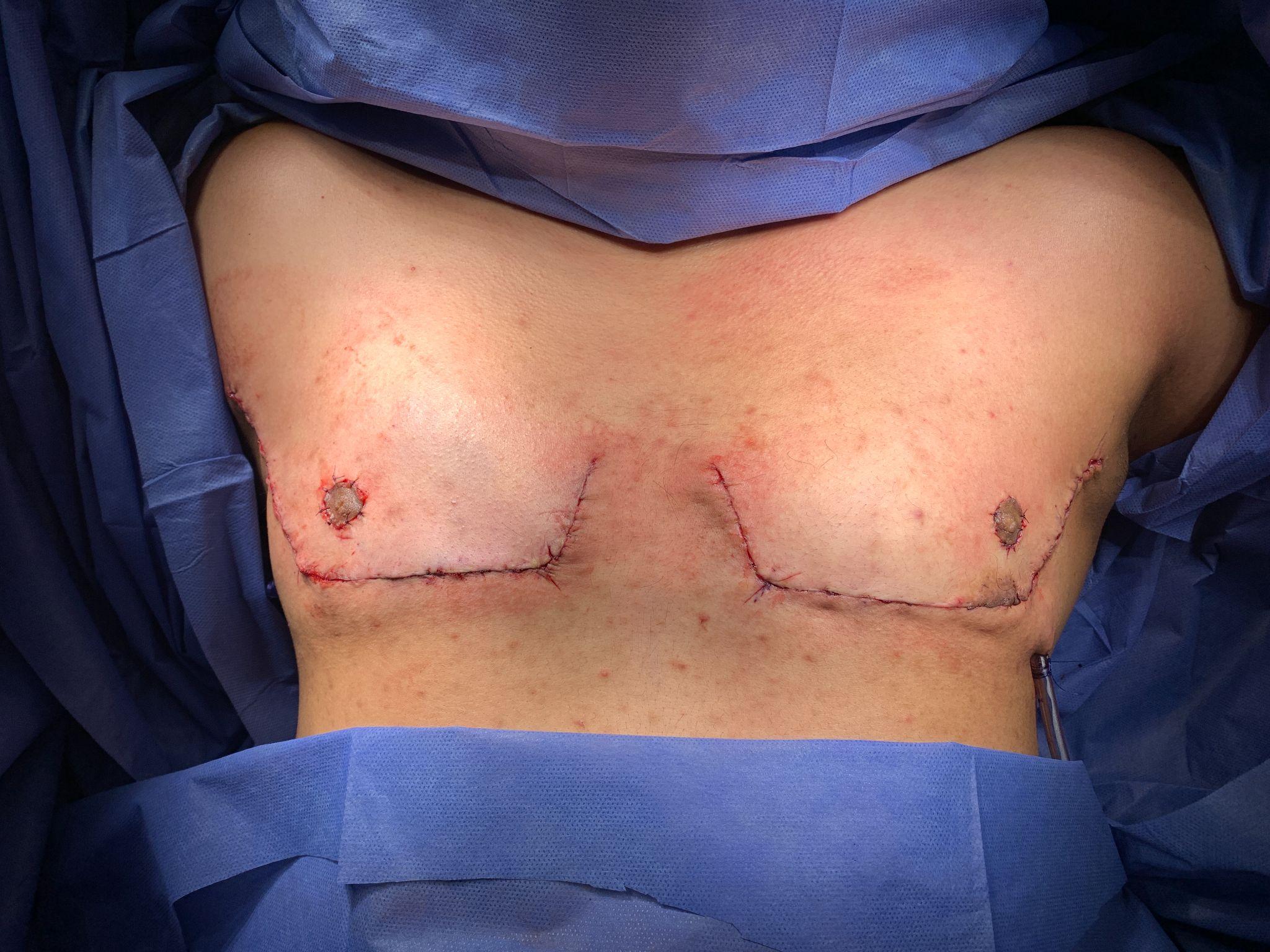 Figure 4: The geometrical result of the immediately result with the lines created by the angular and respect the triangles.
The historical trajectory of surgical marking techniques in mastectomy for gender reassignment is a compelling narrative that reflects the evolution of medical understanding, the refinement of surgical approaches, and the commitment to improving the quality of care for transgender individuals. This comprehensive exploration spans several decades, encapsulating specific moments that have shaped contemporary practices. In the early stages of gender-affirming surgeries, particularly in the 1960s and 1970s, the landscape was marked as mentioned before by the efforts to address the incongruence between gender identity and physical appearance. Lindsay's groundbreaking work in 1979 on creating a male chest in female transsexuals was a cornerstone in this narrative. These early endeavors laid the foundation for future advancements, setting the stage for a more nuanced understanding of transgender surgical needs [9].
As we step into the most recent decade, comparative studies and advancements in surgical techniques have taken center stage. In 2022, Rifkin et al. contributed a contemporary perspective by comparing different incision patterns, reflecting the ongoing quest for optimal outcomes and patient satisfaction [4].
This expansive exploration of the history of surgical marking techniques in gender reassignment mastectomy underscores the journey from continuous efforts to contemporary methodologies. Each phase in this timeline represents a concerted effort to understand and address the unique needs of transgender individuals, with an unwavering commitment to excellence in medical-surgical care. The geometric hybrid technique for preoperative marking in mastectomy represents a significant advance in surgical planning, and its comprehensive discussion involves considering several dimensions, from technique variants to the choice of color and material used. Regarding technique variants, contributions from pioneering studies are highlighted. Berry et al. provide a detailed view of breast reconstruction in transgender patients, introducing precise geometric elements in preoperative marking [1]. Nguyen et al. extend this perspective by optimizing symmetry through the geometric hybrid technique, highlighting the importance of considering individual anatomical features [5].
The choice of color for preoperative marking is crucial and can influence precision and visibility during surgery. The use of contrasting colors can facilitate the identification of key points, ensuring accurate execution of the mastectomy. As for the material used in the marking, the literature highlights the importance of durability and hypoallergenic. Materials such as non-toxic medical inks and sterile markers offer advantages in terms of safety and visibility. Innovative options are explored, highlighting the efficacy of fine-tipped, waterproof markers to improve accuracy and reduce the risk of blurring [10].
Patients are marked preoperatively in the standing position. After marking the midline, lateral pectoralis muscle border, and the bilateral inframammary folds, the superior incision is marked straight across the inferior border of the pectoralis muscle while the nondominant hand tensions the skin surrounding the breast tissue downward.
Having the patient raise their arms at 90 degrees can help accentuate the inferior and lateral borders of the pectoralis. In patients with higher nipple-areola complexes, this line often travels just above the nipple-areola complex. If the nipple-areola complex is in an acceptable position above the pectoralis muscle shadow but there is pseudoptosis with significant tissue below the nipple-areola complex and lax skin, the nipples can be left untouched and the incision designed in the pectoralis muscle shadow below the nipple-areola complex [11,12].
Laterally, this incision should not be carried transversely across the chest but should instead be angled superiorly toward the axilla to follow the inferolateral border of the pectoralis major muscle. In patients with significant excess lateral tissue, the incision continues as laterally as possible while still in the supine position to be able to excise additional skin. Medially, the incision stops approximately 2 cm from the midline.
However, in patients with larger breasts, this may not be possible, in which case we advocate connecting the incisions medially in a gull-wing or inverted-V pattern to avoid a medial dog-ear. The inferior incision will be marked intraoperatively after completion of the superior dissection by transposing the superior flap inferiorly to ensure closure without tension [13-17].
This technique was reproducible in all patients who underwent the surgical procedure after geometric hybrid marking for mastectomy where the NAC graft (nipple-areola complex) was reproduced without complications. The geometric hybrid technique for preoperative marking in mastectomy is a valuable tool, and its detailed discussion involves understanding the variants, choice of color, and material. By considering these aspects, surgeons can optimize surgical planning, improving the accuracy and efficacy of mastectomy in patients undergoing gender reassignment. The transformative journey into the intricacies of surgical marking in mastectomy becomes a symphony of artistry, precision, and patient-centric care.
The authors declare no conflict of interest.


